
On 11 December 2025, the Negative Emissions Platform (NEP) brought the Invest in Carbon Removals roadshow to Frankfurt School of Finance & Management, hosted with FS Impact Finance and organised alongside DVNE (Deutscher Verband für negative Emissionen)
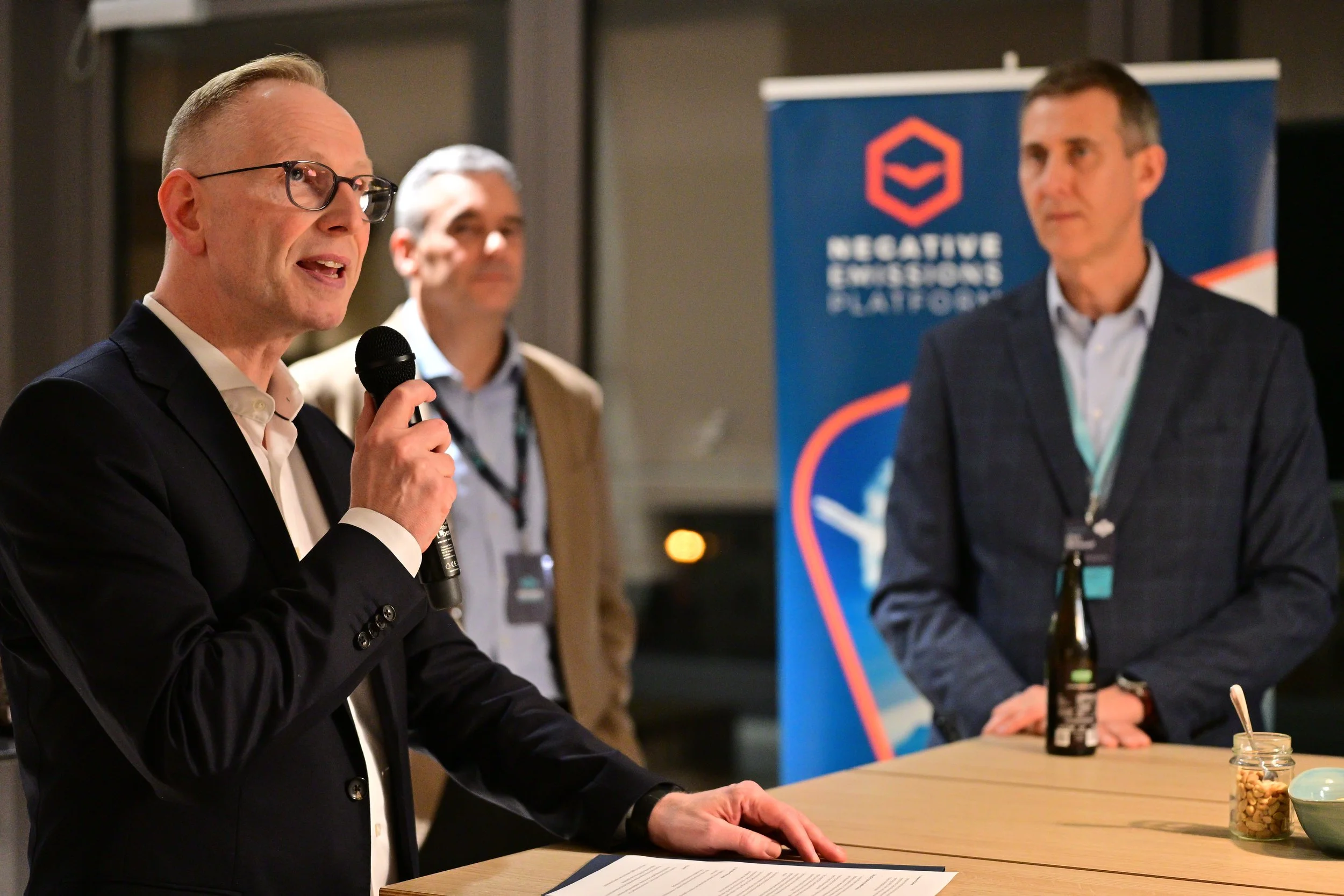
Across project developers, investors, banks, marketplaces, and policymakers, one message surfaced again and again:
Carbon removals will scale when projects look and behave like bankable infrastructure, backed by credible standards, predictable cashflows, and investable enabling infrastructure.
Why Frankfurt, why now: scale is a finance question
Frankfurt was a natural stop for a series focused on connecting finance with durable removals. The concept note set out the scale of the German opportunity: Germany’s carbon removal market is projected to reach 230 million units by 2045, representing a €6 billion investment opportunity by 2030, while demand is expected to outstrip supply by 2030.
For the financial sector, that gap is both a signal and a challenge: the market case is strengthening, but bankability hinges on what sits behind a credit—MRV, standards, project structure, and the infrastructure that makes delivery possible.
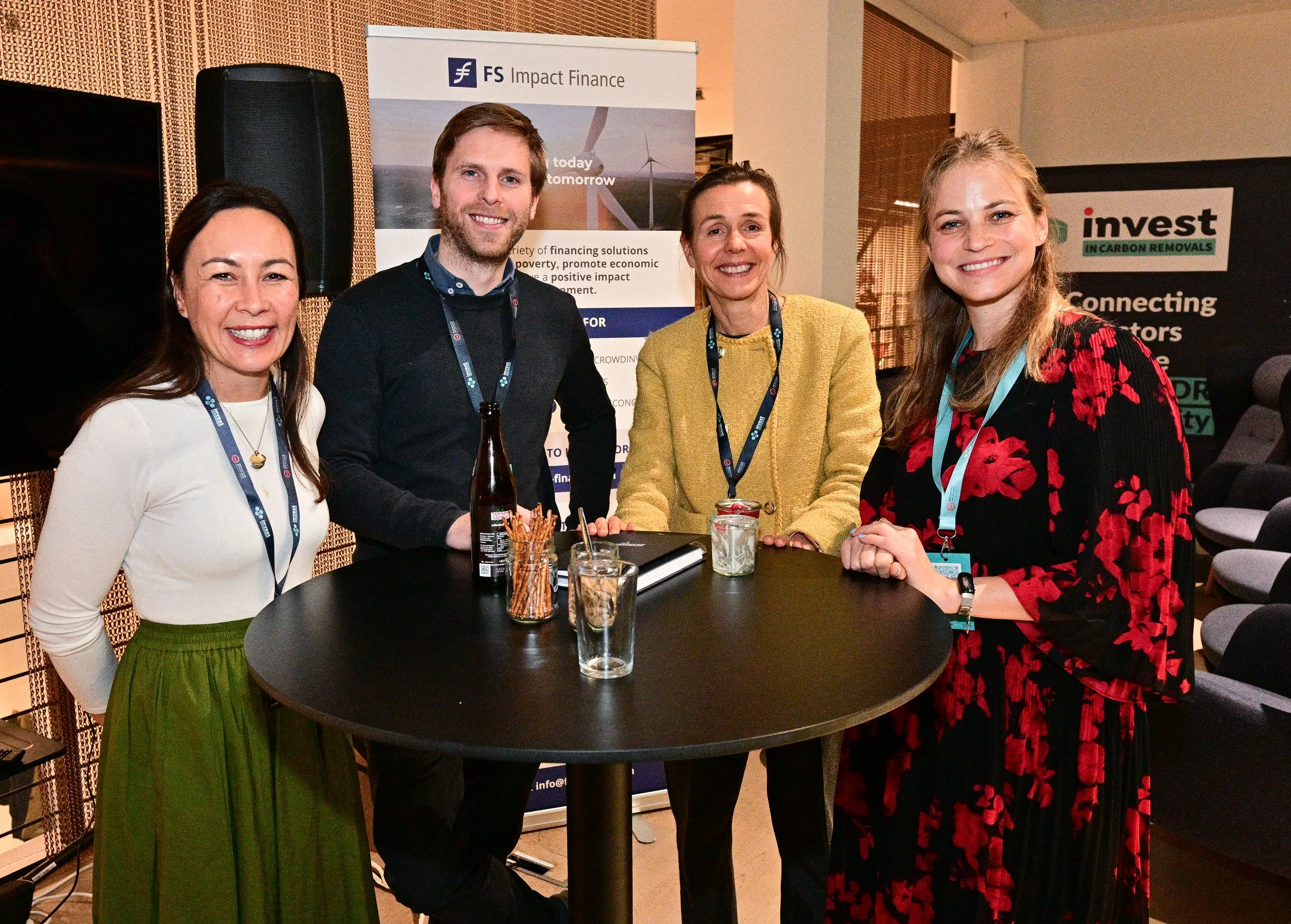
“Bankable” in practice: what finance needs from the sector
Frankfurt’s discussions converged on a practical definition of what “make projects bankable” means in carbon removals:
1) Credible standards and certification pathways
Certification is coming, with more detail expected from the European Commission and that compliance markets are anticipated to drive the volumes needed over time, as voluntary markets alone won’t be sufficient.
2) Predictable cashflows (not just interest)
Banks’ financing logic came through clearly in the discussion: banks prefer stable, certain cashflows with reputable counterparties, and tend to back projects with existing sales.
That framing also explains why market instruments matter. The notes highlighted that options have become a mainstream tool in buyer procurement to manage uncertaint, yet options are not a bankable commitment for suppliers, which can make financing harder if not balanced with firmer agreements.
3) MRV and verification costs that don’t break unit economics
From enhanced weathering to other pathways, participants repeatedly returned to the cost of proving removals. In Frankfurt, the sector’s “how” question was as important as the “what”: projects become financeable when MRV is robust and can be delivered at a cost that supports scale.
4) Investable infrastructure: transport, storage, and enabling systems
The German ecosystem lens underscored that scaling is not only about individual projects. Notes captured that significant investment is needed to scale energy infrastructure, transport infrastructure, storage capacities, and even the underlying methods and systems required for certification and verification, paired with mechanisms that can leverage public funding to crowd in private finance.
Five pathways, viewed through a bankability lens
Frankfurt showcased a diversified mix of approaches—from more established routes to newer systems—explicitly to help funders and investors compare business models, go-to-market trajectories, and risk profiles.
Bioenergy with Carbon Capture and Storage (BECCS): turning waste streams into financeable supply
The agenda featured Anew Climate on BECCS.
The project narrative focused on making biogenic CO₂ from biogas upgrading transportable for storage, addressing the lack of business case that leads to venting and linking removals to biomethane value chains.
Biochar: bankability is about the whole system, not a single revenue line
Syncraft presented biochar carbon removal.
They stressed an operational point with direct finance implications: if energy created in the process is wasted, economics and climate value suffer, so system design matters for investability.
Direct Air Capture (DAC): finance follows proof of delivery and cost discipline
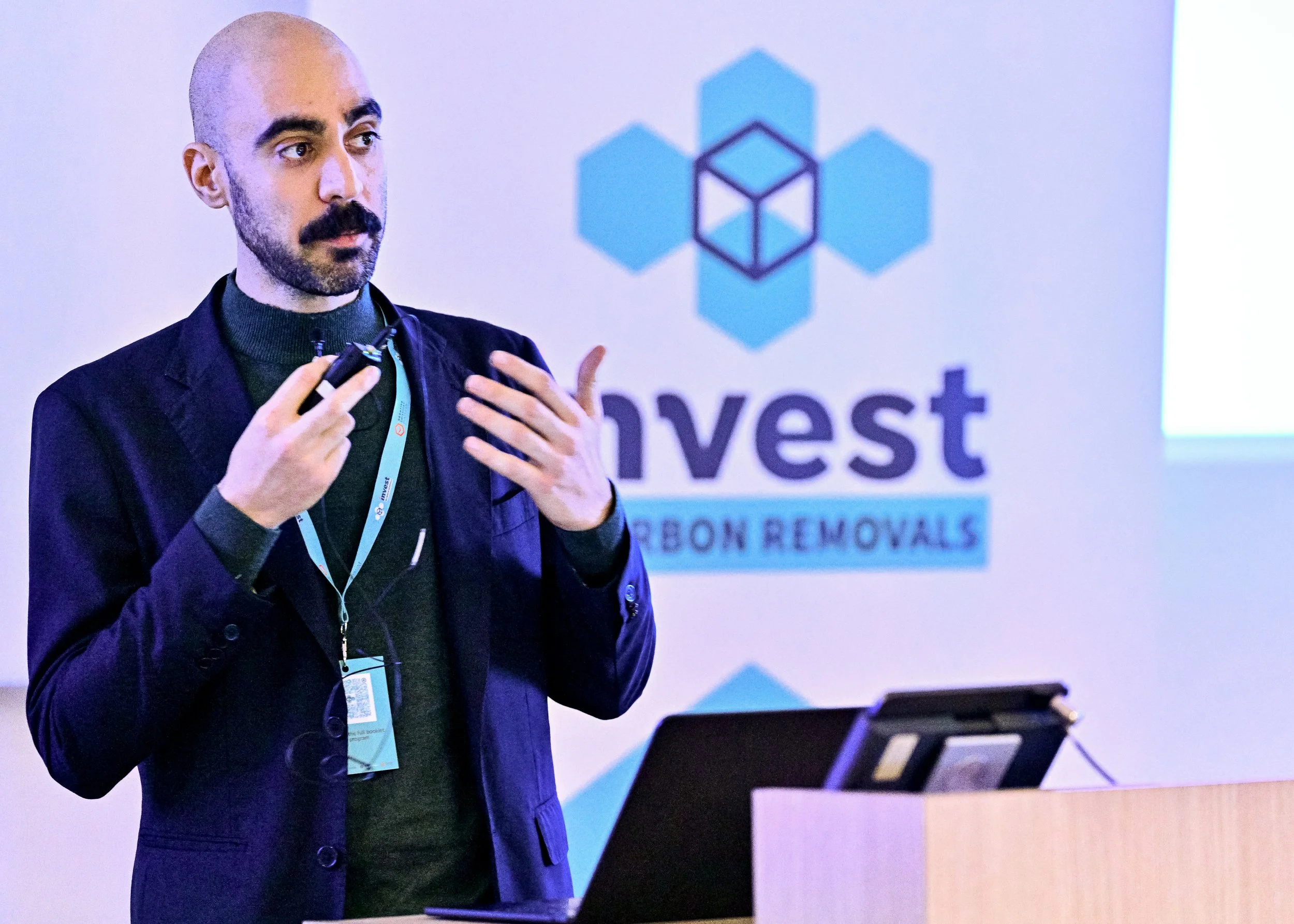
Giuliano Antoniciello, PhD, CEO and Co-Founder at Carpe Carbon delivering his investor pitch at Invest in Carbon Removals Frankfurt
CarpeCarbon presented DAC as part of the curated company showcase.
Meanwhile, a real market tension was highlighted: VC funding flows heavily into DAC, but there can be a mismatch between venture funding patterns and actual offtake/transaction realities, making this another reminder that bankability is earned through delivery and contracts.
Enhanced Rock Weathering: the “winner” may be the one who lowers verification costs
ZeroEx showcased enhanced rock weathering.
Their narrative was explicit: measurement is difficult, trust is a bottleneck, and verification costs are decisive—with a claim that their approach can cut measuring costs by 50%.
Accelerated mineralisation: combining permanent storage with product value
Sequestra presented accelerated mineralisation.
They described a business model that benefits from both the value of carbon stored and the value of construction materials, with process details and indicative storage ranges (e.g., carbonated residue storing 20–40% of its weight in CO₂; up to 400 kg CO₂ per tonne of residue).
Markets, policy and finance: what needs to “click” next
The second half of the programme brought together ecosystem perspectives from markets, EU policy, banking, investing, and Germany’s national ecosystem: ClimeFi, DG CLIMA, SEB, Carbon Removal Partners, and DVNE.
Three bankability signals stood out:
Buyers are professionalising procurement, but suppliers still need financeable commitments
There is a need for both expanding demand and increased sophistication, alongside a caution: procurement tools like options help buyers manage uncertainty, but they don’t automatically translate into the firm commitments suppliers need for financing.
Policy clarity is becoming a key input into investment decisions
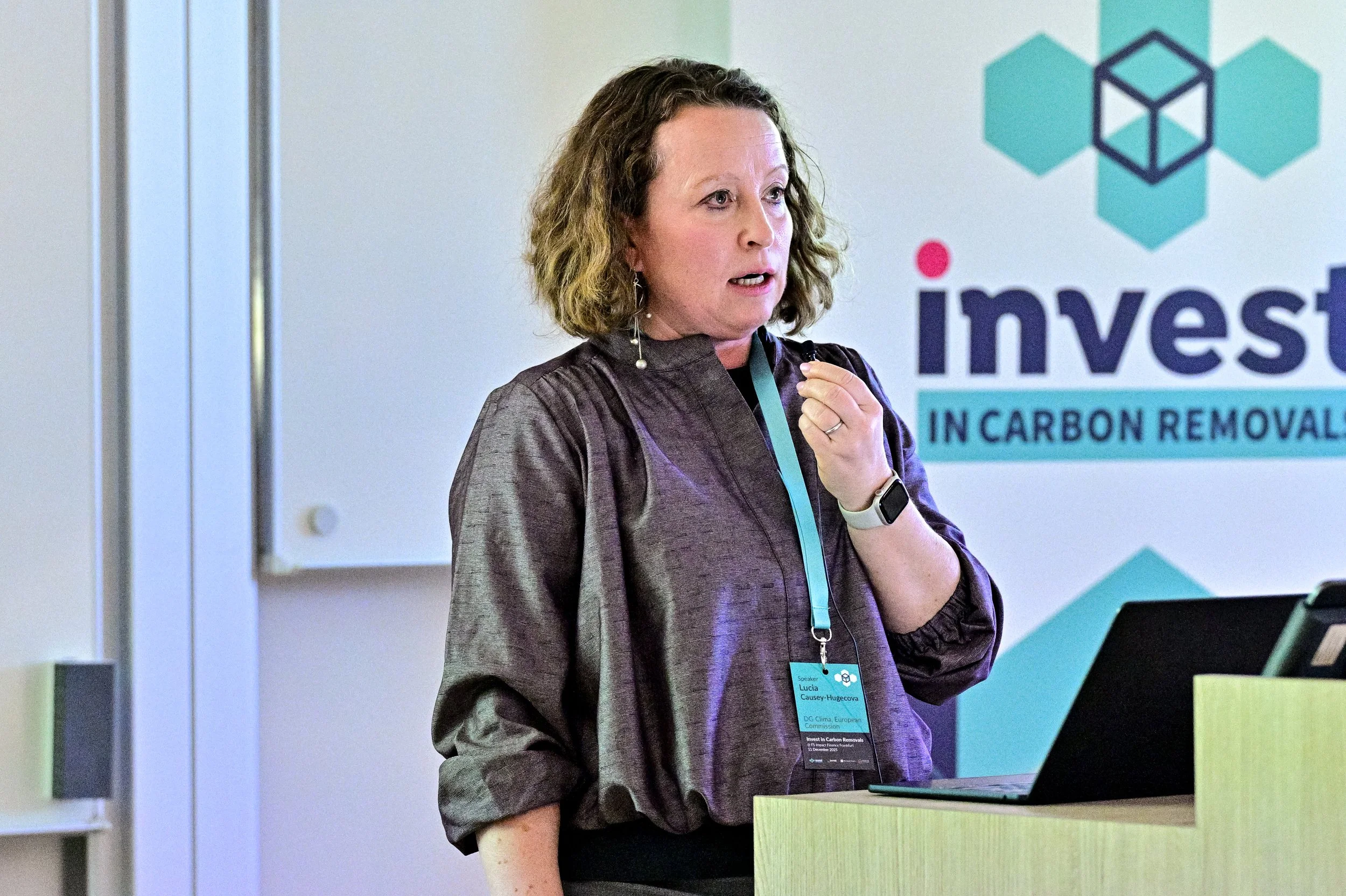
Lucia Causey-Hugecova, Carbon Removals Policy Expert, DG Clima, European Commission
There are expectations around CRCF methodologies and sequencing (e.g., bio-CCS, DAC and biochar described as among the most advanced; additional methodologies expected mid-2026; the EU registry discussed as a 2028 milestone; and early issuance of CRCF credits discussed in the 2027 range).
An EU ETS integration discussion was expected to progress, with a decision referenced around mid-2026, highlighting why timelines matter for capital planning.
Finance will diversify beyond VC when standards, subsidies, and cashflows align
SEB’s perspective in the notes was direct: bonds are not currently used in the sector due to balance sheet requirements; VC remains primary for many companies; and banks look for dependable cashflows and credible counterparties. There is also a role of subsidies and learning from other markets’ design choices—again anchoring the bankability theme.
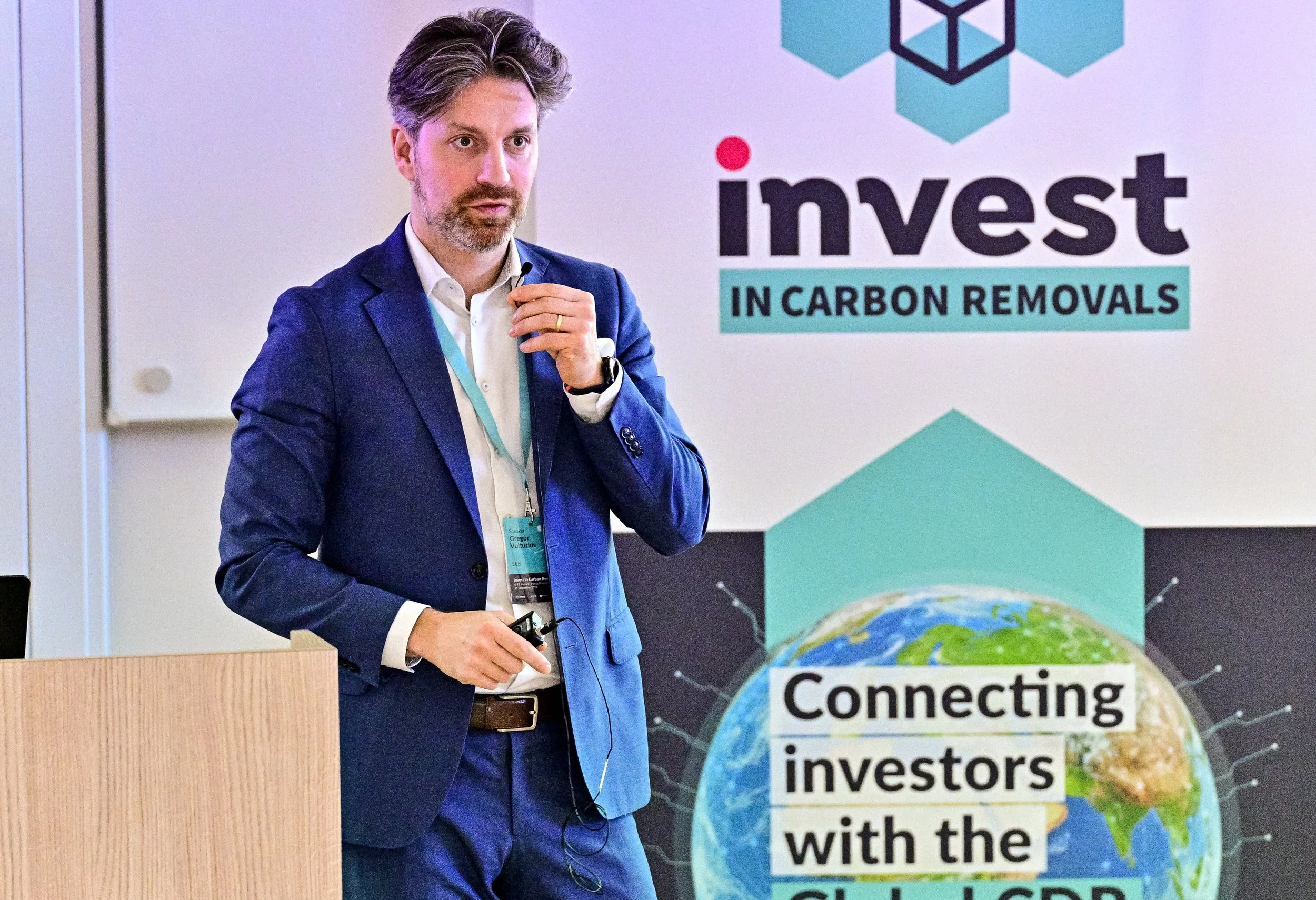
Dr. Gregor Vulturius, Lead Scientist and Advisor, Climate & Sustainable Finance, SEB
Germany’s scaling lever: using public finance to unlock private capital
The Frankfurt conversation also pointed to public mechanisms as critical to de-risk early market formation. One perspective highlighted that up to €5 billion accumulated to 2030 is needed to scale the sector (including infrastructure and methods), and referenced German budget figures of €500 million for negative emissions in 2026, with €150 million the following year.
Invest in Carbon Removals in Frankfurt was the final stop in NEP’s 2025 roadshow sequence. The message from Frankfurt’s finance market was straightforward: carbon removals will scale fastest where projects are structured for underwriting—credible certification pathways, verification that works at cost, firm-enough revenues, and investable infrastructure behind delivery.
