
Europe sets the bar for permanent carbon removals with new CRCF standards
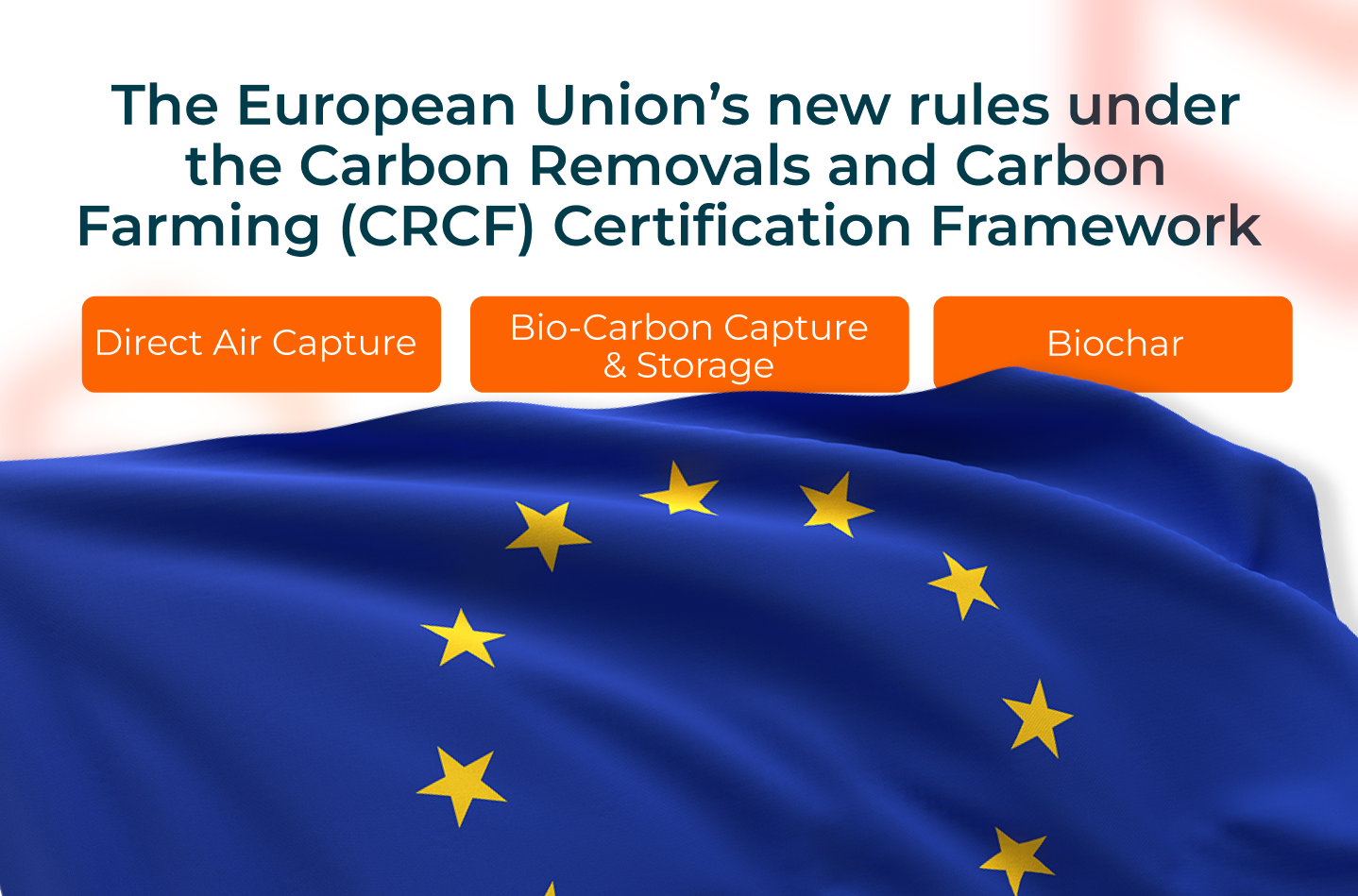
Today, the European Commission adopted the first certification methodologies under the EU’s Carbon Removals and Carbon Farming (CRCF) framework, setting out how independent certifiers should verify permanent carbon removals against clear EU criteria. Covering Direct Air Capture with Carbon Storage (DACCS), Biogenic Emissions Capture with Carbon Storage (BioCCS), and biochar, the new standards help turn permanent removals into something that can be assessed consistently and credibly. For investors, buyers, and policymakers, this is a practical step towards scaling a market that is built on verification and environmental integrity.
Today, the European Union took another concrete step towards making permanent carbon removals real, verifiable, and investable at scale.
If you’ve been following carbon removals for a while, you’ll know the recurring challenge: everyone agrees removals will be needed, but markets don’t scale on good intentions. They scale on rules people can trust and on independent verification that holds up under scrutiny.
That’s why the European Commission’s latest move matters. The Commission has published new EU standards under the Carbon Removals and Carbon Farming (CRCF) certification framework, setting out how independent certifiers should assess whether CO₂ removed from the atmosphere is genuinely permanent and sustainably captured, in line with clear EU quality criteria.
What was published and why it matters
CRCF is the EU’s first EU-wide voluntary framework for certifying carbon removals, carbon farming, and carbon storage in products. It was designed to harmonise how quality is checked across the Union and to improve transparency and credibility.
The standards released now come as a Delegated Act under the CRCF Regulation and introduce certification methodologies for three core permanent carbon removal pathways:
Direct Air Capture with Carbon Storage (DACCS)
Biogenic Emissions Capture with Carbon Storage (BioCCS)
Biochar Carbon Removal (BCR)
Why this matters for investors, buyers, and policymakers
The point of these standards isn’t to add paperwork. It’s to make it easier to answer the practical questions that have held the market back for years:
Is the removal real and additional?
Is storage durable in the way “permanent” implies?
Is the activity delivered without unacceptable sustainability trade-offs?
Can an independent third party verify the claims in a consistent way across the EU?
When these questions are handled through a public, EU-backed framework, it becomes far easier for capital and demand to move with confidence—because the baseline expectations are clearer and more comparable.
““We’re delighted to see these new standards see the light of day after close consultation with the European Commission and our members. As the world’s first jurisdiction-wide, government-led certification scheme for CDR, CRCF will give investors and buyers greater confidence to back permanent removals.””
A European benchmark others can learn from
CRCF is often described as a world-first jurisdiction-wide, government-led certification scheme for carbon dioxide removals, precisely because it aims to create a functional certification system across an entire jurisdiction, rather than relying on voluntary initiatives alone.
That matters beyond Europe. A credible public framework becomes a reference point: it helps raise the bar internationally, and it gives other governments something concrete to adapt rather than starting from scratch.
Europe is also preparing to use its own framework
There’s another reason these standards matter: the European Commission has made clear that it intends to compensate residual emissions with high-quality carbon removals by 2030, and it is exploring the feasibility of buying credits, including through a joint purchase platform.
And in its December 2025 progress review on Greening the Commission, it notes that pilot purchases would only take place once CRCF-certified credits become available.
That is the kind of signal the market pays attention to: standards first, then credible demand.
What NEP will keep pushing for
Publishing methodologies is an important milestone, but it’s not the finish line. The next phase is about implementation that is credible and usable:
making sure verification capacity scales with project pipelines
ensuring methodologies remain robust as experience accumulates
keeping sustainability and permanence requirements strong in practice, not only on paper
helping policymakers translate certification into bankable demand signals, in ways that complement rapid emissions reductions
Europe has chosen to lead by putting robust governance in place, alongside ambition. CRCF is one of the clearest examples of that approach, and today’s standards make the framework significantly more actionable for the real economy.
